
 En
En  Fa
Fa 

TOKYO – An increasing number of Japanese companies are seeing business opportunities in exporting halal-certified food products. Although there are security concerns or other risks associated with some destinations, expectations for this sector are rising based on projected population growth and economic expansion in the Muslim world.
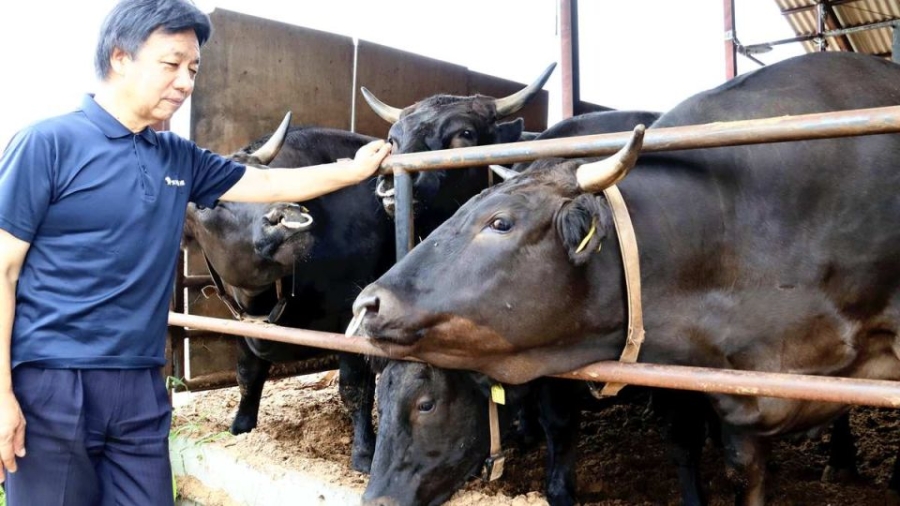
Exports of Hitachiwagyu Beef, a brand of Japanese black beef from Ibaraki Prefecture, reached a record high of approximately 173 tons in fiscal 2025, more than three times the previous year’s figure.
A major factor in this growth was the producers’ shift to halal-compliant processing and subsequent launch of exports to countries such as Saudi Arabia.
According to estimates by the U.S. polling firm Pew Research Center, the world’s Muslim population increased by 347 million over the decade ending in 2020, bringing it to approximately 2 billion, accounting for about one-quarter of the total global population.
With the domestic market shrinking due to population decline, a group of producers, the Ibaraki Hitachiwagyu Beef promotion association, has turned its attention to Islamic countries, where there is demand for wagyu but which can only take beef processed in accordance with halal standards.
The association therefore commissioned a Kobe facility, one of the few halal-compliant abattoirs in Japan, to slaughter their cattle.
The cattle are transported by truck to the facility, where Muslim workers, who hold halal meat processing licenses issued by the governments of Indonesia and Malaysia, pray in Arabic as they perform the slaughter.
Fukuoka Soy Sauce Shop, founded in 1895 in Iga, Mie Prefecture, recognized the shrinking domestic market as a crisis and has been exporting halal-certified soy sauce, yakiniku sauce and noodle soup base to Malaysia and Singapore since about 10 years ago.
Although trace amounts of alcohol are produced during the soy sauce fermentation process, the company reduces the alcohol content by heating the mixture for longer than usual.
To prevent contamination with non-halal ingredients or foods, the products are manufactured using dedicated sinks and cooking utensils. The company has obtained certification from the Nippon Asia Halal Association, which issues halal certifications for food and cosmetics.
S.D. Hachikan Co., a company based in Hachinohe, Aomori Prefecture, obtained certification from the same association in 2022 for its boiled scallops, which are harvested from Mutsu Bay in the prefecture.
According to the company, while scallops do not require halal-compliant processing, it sought the certification in the hope that it would make a greater number of people feel comfortable eating them.
The company already has a track record of exporting to Malaysia and aims to expand into other Muslim-majority countries in the future.
Tomohiro Sakuma, president of the Tokyo-based Japan Halal Business Association, which provides support for halal certification and exportation, said, “Islamic countries are expected to experience economic growth going forward. I strongly encourage Japanese companies to deepen their understanding of halal and take on the challenge of exporting to these markets.”